
A quality bra can be a bit of an investment, so it’s natural to want to get as much wear as possible out of your new purchase. There are many factors that affect the lifespan of your bra, not all of which you can control. However, laundering and care is a huge consideration for how long your bras last, and fortunately, that’s something you can take entirely into your own hands.
Bras are made from delicate materials, including elastic fibers which degrade slowly with use and age. This is why bra bands especially tend to stretch out over time. Preserving the elastic is a big part of helping your bras last. The two main principles to accomplish this are:
- Avoid heat.
- Avoid excessive twisting and tugging.
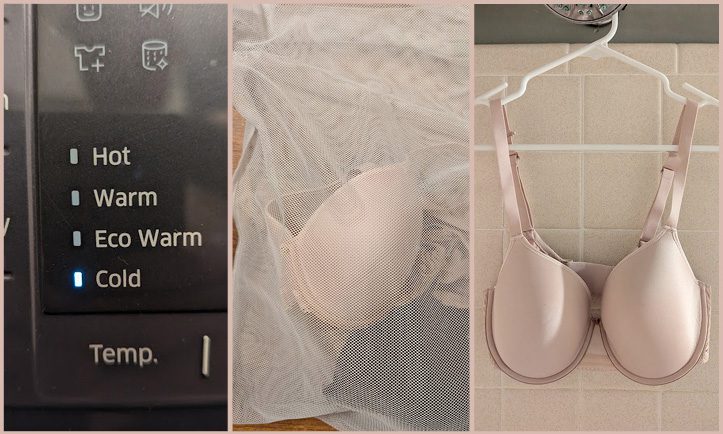
Hand washing is highly recommended because it is generally the most gentle laundering method possible. (I sometimes joke that someone out there is probably getting aggressive with their hand-washing to the point of manhandling, which definitely wouldn’t be ideal. 😅) If a washing machine is the only practical way you foresee laundering your bras, that can be fine as well under most circumstances, assuming that you take a few precautions to protect your underthings. Use the most delicate cycle available on your machine, with cold water only. I also strongly advise the use of a zippered mesh wash bag or “pod” to give your bras a protective buffer in the washing machine. This is less about reducing gradual wear and tear over time than it is about preventing sudden, catastrophic damage to your bra from snags and entanglement. You should fasten the hooks and eyes on your bras before laundering, but it isn’t unusual for them to come open during the wash cycle. Unfortunately, it is very easy for those hooks to get caught on parts of the washer or other pieces of the bra, and something that goes into the washer new can come out ruined. In a pinch, you can even use a pillow case for protection instead of a wash bag, but your undies won’t get as clean since the water can’t circulate as effectively.
Whichever washing method you prefer, use only mild, lingerie-safe detergents to wash your bra. There are many options available, and they’ve all been pretty equivalent in my personal experience. Grail sells Fashion Care detergents (previously known as Forever New), and Soak, which doesn’t even need to be rinsed. They’re all great and effective products.
Bras should never, ever go in a clothes dryer. This is probably the BIGGEST source of avoidable bra damage and destruction, and if you follow no other advise in this post, I urge you to take this one to heart. Dryer heat will destroy the elasticity of your bras, as well as causing shrinkage, wire distortion, and fraying. Always air-dry. After washing, reshape your bra and either hang it up to dry or lay it out on a towel. I prefer hang-drying since air can reach all sides of the bra, which helps it to dry quickly.
You may be wondering, how often should you wash your bras? Interestingly, I’ve heard wildly different instructions from different sources, and none of them provided any sources or evidence to back up their point. In particular, I really disagree with folks who insist that bras must be washed every time they’re worn because, unlike panties, bras just aren’t exposed to areas of our body associated with a lot of moisture and microbes. I take a moderate approach. Oils from your skin and a buildup of perspiration and detritus can subtly contribute to the breakdown of elastic, but so can the laundering process itself. Washing your bra every three to five wearings is usually plenty under average conditions, like a jacket or other outerwear. Of course, you may want to adjust this schedule based on your activities, especially during the hot and sweaty times of the year.
Remember that there are other factors that also contribute to how long your bra will last. For instance, a bra that is worn daily will have a shorter lifespan than one that is worn in rotation with others, and having at least two bras to alternate is helpful when one of them needs washing. As bra fitters, it’s also one of several reasons that we generally recommend a snug band on a new bra. That bra will break in and loosen up anyway, so we want to make sure that it doesn’t stretch out too much and too quickly, which will leave you in need of a replacement sooner.


0 Comments