
Previously in this blog, we’ve talked about bra lifespans and the biggest contributors to unnecessary damage and premature wearing-out of your bras: excess heat and excess twisting & tugging. Improper laundering and care is one cause of this sort of preventable harm that we see a lot, but another extremely common cause of bra breakage is when wearers hook and spin their bras with the cups pointing downwards and then flip the cups before placing their arms through the straps. Let’s discuss the less-damaging alternative: Cups Up!
Before I begin, we need to mention that back-fastening your bras- that is, placing your breasts into the bra cups and reaching behind your back to connect the hooks and eyes- is the gentlest method of hooking bras and puts the least amount of wear and tear on the garment over time. This is because the band isn’t subjected to all the twisting and tugging required to spin it around your body. However, back-fastening is simply not possible for everyone. It requires a fair amount of shoulder mobility, manual dexterity, AND practice. Hooking-and-spinning is a necessary alternative for many bra wearers, and if you’re one of them, don’t feel bad about it! You’re far from alone. The Cups Up hook-and-spin will help to protect another important part of your bra: the underwire.

A proper starting position for the Cups Up method looks like this:

The bra cups are already in the upright position. After spinning the bra around your body, you can place your arms through the straps, situate your breast tissue into the cups, and you’re good to go!

Unfortunately, quite a few bra wearers were taught another version of the hook-and-spin maneuver as they grew up: Cups Down. In this set-up, the bra’s underwire is pointing downwards like a frowny-face. And for good reason. ☹️
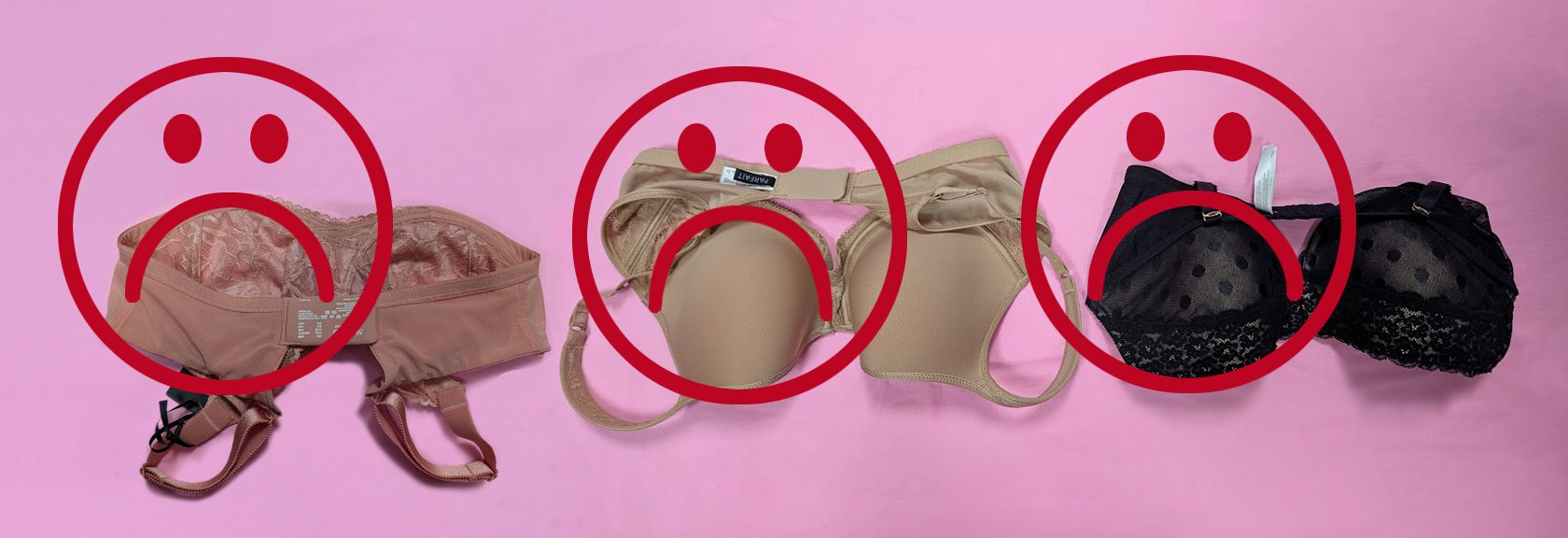
At its starting position, the entire bra is actually inverted, so the inner surface is facing outwards and the outside of the bra sits against your body.
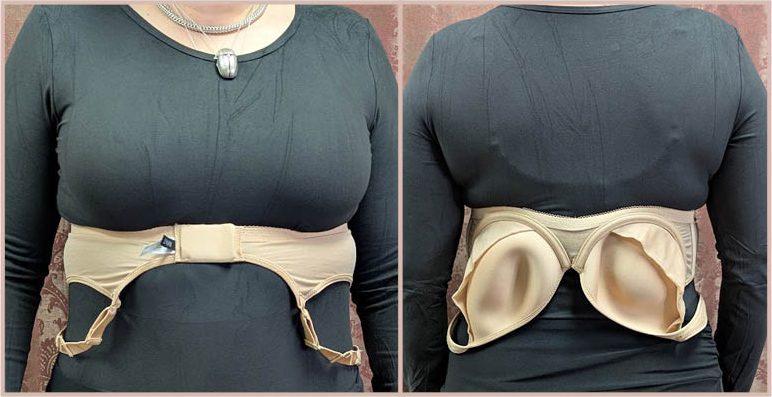
The spinning portion of this variation is basically the same as for Cups Up. It’s what happens next that’s the problem.

The cups have to be flipped up to bring them into the correct position on the body, and this forces your underwires to deform and bow outwards. If this were to happen once or twice, it probably wouldn’t make a huge difference. However, if this is how you put your bras on daily, the repeated strain on the wires is very likely to cause the underwire itself or the fabric channel containing the wire to fail prematurely.

Underwires are sturdy, but being forced to bend in the same spot over and over again will eventually weaken that area until it’s liable to snap. Additionally, the wire tips are forced against the edges of the fabric channel in an unnatural way. Over time and after many repetitions, the ends of those wires can puncture the fabric or break through the stitching where all of that unintended force is concentrated. (If you also put your bras in the dryer, this is exponentially worse, since the heat amplifies these problems and does a lot of damage on its own.)
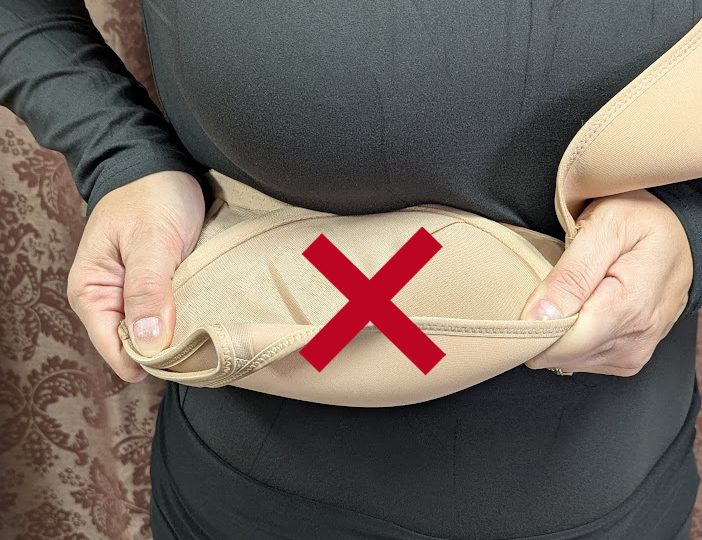
A couple of bonus tips for making hooking-and-spinning easier on your bras:
- Make sure that you hook at least two sets of the hooks before you spin. In the fitting room, we’ve noticed that some folks like to do a half-and-half version of fastening their bras, where they do up one hook in the front, spin the bra, and then close the rest of the hooks behind their back. This puts a huge strain on the single hook that’s fastened, and it can tear out the stitching around the hook almost immediately. Fastening at least two hooks keeps all the force from being focused on one tiny area.
- If possible, consider hooking your bra on the side of your body instead of the front. That way, you don’t have to spin the bra as far, and it puts less stress on the bra band over time.
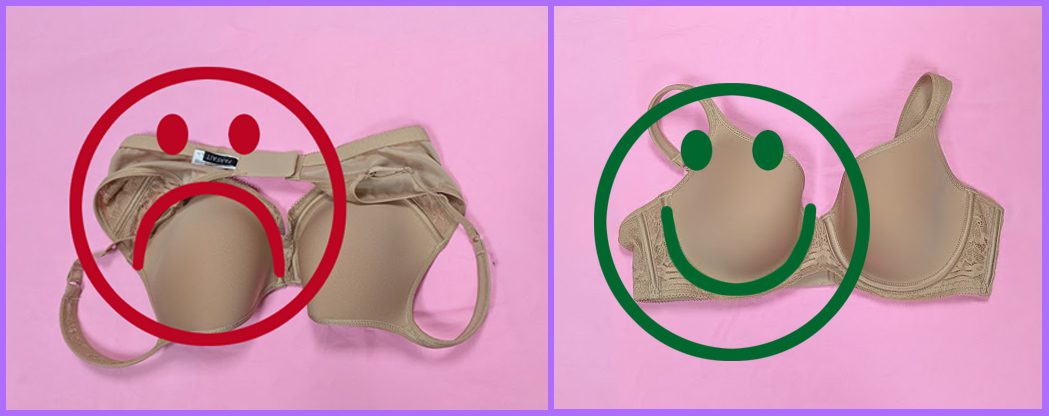
So remember: Cups Up = happy bras. Cups Down makes your wires frown. 😛


0 Comments