
Whenever I’m speaking or writing about the extensive size range we carry in-store at Grail, I explain that we have “pretty much” or “just about” every size made anywhere in the world. I include qualifiers partly because I can’t speak to every offline bra-maker who doesn’t import to the American market, but also because things like ThirdLove’s half-cup sizes exist. In fact, ThirdLove is now wholesaling their products to independent retailers like us, and we could bring those half-cup sizes into the store if we thought they were really helpful. We don’t believe that they really bring anything new to the game, though, for a whole assortment of technical and practical reasons.
1. We’ve said it before, and we’ll say it again: There are no consistent universal size standards for bras. Some 32Bs fit bigger or smaller than other 32Bs (and the same with 38DDs, 42Hs, and every other size.) It is extremely common for bras with the same label size to fit the equivalent of a full cup size up or down from an identically labeled bra in a different style, often even if they’re made by the same brand. If you’re trying bras and feel like one cup size is a little too small but the next size up is just a bit roomy, (which is already unusual… see point 3,) that situation only applies to those specific bras. Try the same sizes in a different bra style, and they’re going to fit differently- and hopefully better.
2. Breasts are almost always asymmetrical, and they’re constantly changing. Seriously, pretty much all of us has one boob with at least a bit more volume. We fit bras to the larger breast to avoid impinging the tissue. A half-cup bra may move us closer to ideal volume for one side, but at the cost of the fit on the other side. Improvement-wise, it’s a wash. More importantly, breast volume can fluctuate a great deal in response to hormonal shifts even in the very short-term; a difference of a cup size across a hormonal cycle is not unusual. In a literal sense, your boobs may not be exactly the same size from day to day.
3. The difference between the amount of space in two standard cup sizes is pretty small to begin with. Each cup letter-step represents one inch of difference between the circumference of your ribcage and the circumference around the widest part of your bust. Just one inch. That’s not a lot! The lingerie industry, as a whole, has decided this single inch is the smallest meaningful increment when it comes to basing the bra sizing system. Does that automatically mean they’re right? Maybe not automatically, but there’s a good case to be made for it. Half-cup sizes are based on a half-inch difference in diameter. If someone made quarter-cup bras, the difference in cup capacity would be based on a quarter-inch difference between the underbust/around-the-bust measurements. At some point, there’s just not enough meaningful difference between the volume of these cups to matter. Fun fact: ThirdLove actually isn’t the first bra maker to offer half-cup sizes. They’re at least the fourth. Every other half-cup option by a brand has been dropped from production because consumers decided that their benefits weren’t significant.
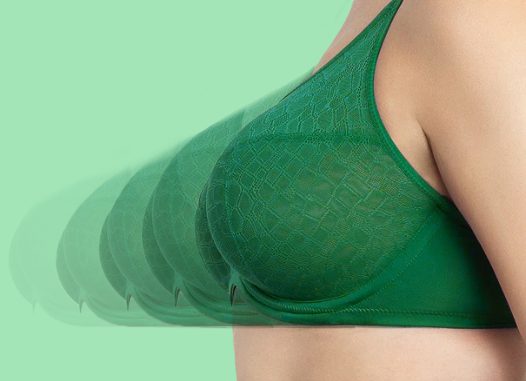
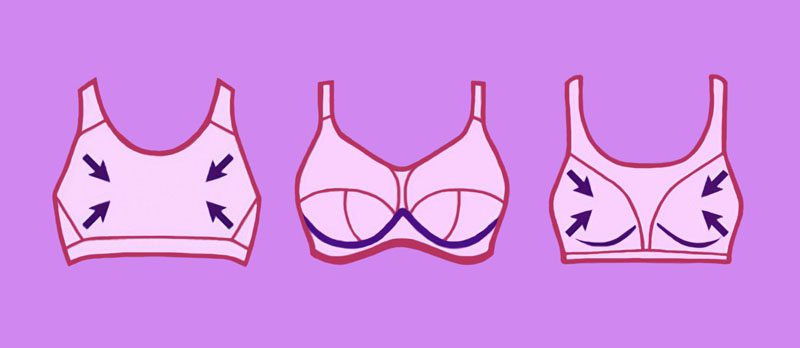
4. Many types of bras offer an adaptable fit. Modern bras are almost always made with elasticized materials that allow them to stretch and adapt to your body contours. Exactly how much they can flex depends on the type of bra and how it’s constructed. Stiff, foam-molded “t-shirt” bras, especially ones with a lot of extra padding, have the least ability to form to your anatomy. I sometimes describe them as “plate armor” bras that you just strap yourself into. If you’re willing to venture outside of this category, however, you’ll discover it’s much easier to find bras that really match your size and shape. Look for bras with some stretch to at least the top portion of the cups. Heck, even tightening your straps can help. After all, the job of the straps is not to hold your entire bra up; it’s to keep the top of the cups snugged to your chest.
Also keep in mind that many fit problems are actually due to shape factors, not size. A bra that causes spillage could be due to a too-tight neckline, tissue displacement from inadequate depth at the cup base, or a ton of other causes. Extra intermediate sizes isn’t the answer.

0 Comments