
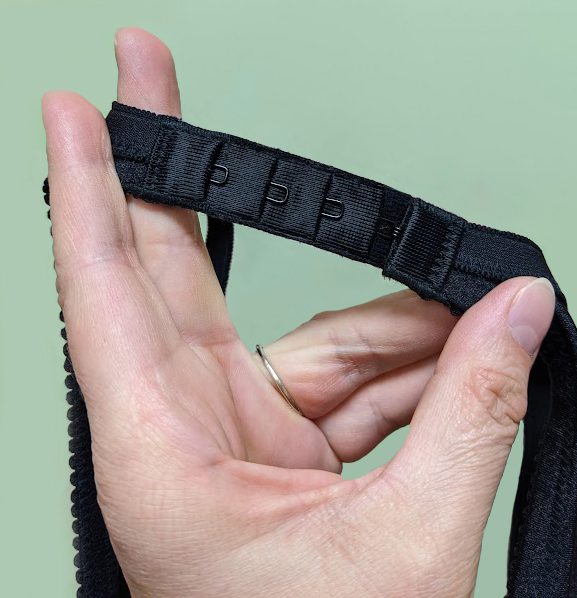
As I’ve discussed previously, the Grail team is constantly considering new bra styles with an eye for possible additions to our shop inventory. There are a ton of options out there, from a vast assortment of American and international bra makers, and of course our goal is to hone in on the truly standout styles. To make our task a little bit easier, our fitters have agreed on a few characteristics that more or less automatically drop a bra from consideration. These “dealbreakers” are features that we’ve had significantly negative experiences with in the past or that give us doubts about that bra’s ability to provide wearers with an experience that meets our professional standards.
Today’s dealbreaker is: single hook clasps. A traditional bra hook-and-eye closure can use a variable number of hooks (and corresponding eyes) per column. 2 to 4 hooks are the most commonly seen. However, a handful of bra styles are designed with just one single hook to fasten the bra at the back.
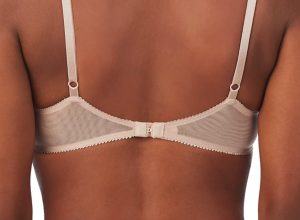
The choice to use one hook is primarily fashion-focused. The back of the band is less bulky this way, and some wearers like the faster dressing and undressing that comes with just having one hook and eye to line up. A few bra styles incorporate the single hook in ways that are visually appealing:
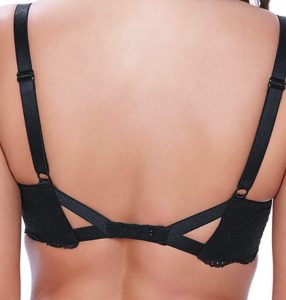
There are drawbacks to this design element, though, and they’re significant enough to sour us on the whole category. The primary disadvantage to having only one hook is that it puts much of the strain from stabilizing the bra band- the part of the bra that provides the overwhelming majority of a bra’s support- on a single piece of hardware. If that hook starts to deform due to mechanical stress, or if the stitching holding that hook in place begins to fail, the bra is toast.

Basically, the hook is under much greater strain because tension isn’t distributed across multiple points, and there’s no backup if the piece is compromised.
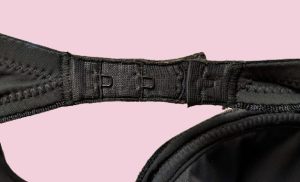
Additionally, many single-hook bras also have very thin or narrow bands. The number of hooks on a bra doesn’t directly impact how much support a bra can provide, but a wider band does increase the surface area of the bra in contact with your body. This improves traction, which helps to stabilize the band and securely support your breast tissue. Narrow bands have less surface area to distribute pressure. They may not hold you up as well, and because the force of the band is being directed to a very isolated area around your body, some wearers find them less comfortable. Think about the sensation of tying a string around your ribcage. A narrower band is more likely to feel like it’s cutting in versus hugging you.

Just as the risk of the hook hardware failing increases due to strain falling on a single point, the band may also stretch out faster since there’s less material to disperse tension. This is especially problematic with high-end bras that customers (reasonably and fairly!) expect to last. The style below, which is made by a well-regarded brand we don’t currently stock, retails for $153 at the time of this writing.
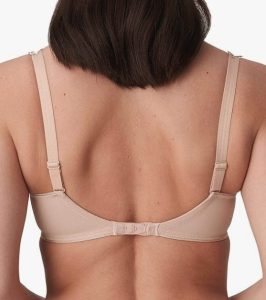
Even worse, if your band does acquire some extra slack due to stretching, that single hook is more likely to come unclasped on its own. That’s definitely something that most of our customers would rather avoid!
So there you have it. With so many style options to choose from, the Grail team just doesn’t want to risk the satisfaction of our clients with single-hook bras. On a final note, I wanted to share this example I found of a chain store bra that features both a single hook and bonded edges, our Dealbreaker # 1:
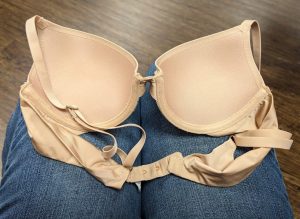
It’s pretty much the physical embodiment of bra fast fashion: something intended to be made cheaply, sold in quantity, and fail rapidly, necessitating the next purchase. 😕


0 Comments