

A lot of our clients have had uncomfortable experiences with underwired bras. As we’ve often repeated on this site and in person, a well-fitting underwire should never cause pain or irritation. Well-fitting is the key here, though, and finding the best underwire match for your body can be a tricky process. There are many, many different variations on bra underwires. Would you like to see for yourself? A picture is worth a thousand words, as they say, so I decided to dismantle some of the well-worn bras our clients have donated for recycling.
Let’s look at some of the many ways underwires can differ from each other and examine how this may affect fit, function, & comfort.
Size: This is a pretty basic attribute, but it’s still a super common cause of underwire discomfort. A too-small underwire can press directly into sensitive breast tissue. The majority of clients we see who are being professionally fitted for the first time come in wearing bras with cups that are too small for their total breast volume.
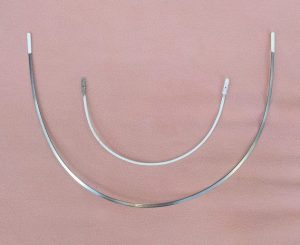
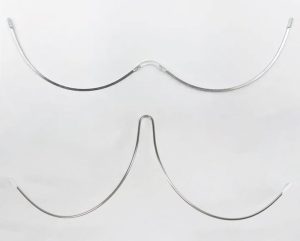
Shape: There are many aspects of underwire shape, and some of these traits can overlap or combine in different ways. The top set of underwires in the next photo are both short and wide. The set on the bottom are taller and more narrow to varying degrees.

Width and Height: Both height and width can make a huge impact on how your bra fits and feels on your body. If your breast base is wide, a narrow wire might pinch, even if there’s technically enough space in the bra cups to contain you. On the flip side, if you have a narrow breast base, a wide wire may overshoot along your side, leaving empty space at the outer edge of the bra cup or even rubbing against the inside of your arms. Too-tall underwires are another very common cause of problems, especially for bra wearers with shorter torsoes.

V-shape versus U-shape: In the image below, pay attention to the angle of each underwire at the tips. Especially for individuals with more side volume, a V-shaped wire that angles out may be more comfortable than a U-shaped wire that points vertically at the ends. If the wire is flexible, sometimes these U-shaped wire tips may even bend inwards under strain when worn. However, a V-shaped wire, similar to an overly wide wire, could cause bra cup deformation or poke your arms if it extends out too far past your breast base.

Symmetrical versus Plunge: This could be an important factor for bra wearers who have close-set breasts or a sensitive sternum. J-shaped or plunge-style underwires sit much lower in the center of the bra that a symmetrical underwire. Plunge styles are sometimes the best wired bra options for folks who don’t have enough open space on their sternums to keep tall wires from laying in contact with their breast tissue. They can also be a lifesaver for anyone (like myself) with sensory issues in this area.

Wire Thickness: Depending on the bra’s other characteristics, a thicker wire may be felt more by the wearer.

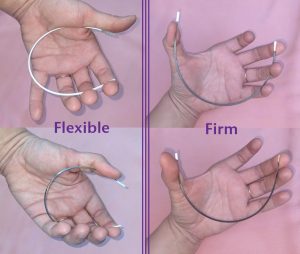
Flexible versus Firm: Metal bra underwires generally use either stainless steel or metal alloys, including nickel & titanium blends. Different metals have different tensile qualities. As a result, some underwires are flexible while others are very firm and barely compress at all under pressure. These different behaviors each have pros and cons. A flexible wire can move with you and take on a shape closer to your body’s natural contours when worn. It won’t provide the same amount of movement reduction as a firm wire, however, and the wire tips can recurve under strain. Flexible wires will mostly be found in petite to moderate cup sizes. A flexible wire may be more prone to breakage as a result of repeated mechanical stress over time, but firm wires can also fail since the metal itself is more brittle.
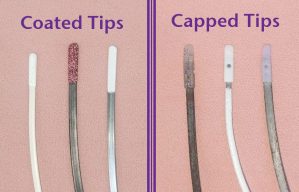
Underwire End Treatments: This isn’t something that should impact comfort, but the amount of variation is surprising and kind of neat.
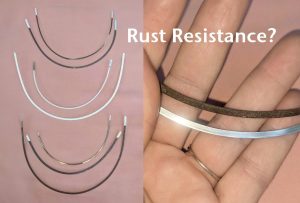
Rust: The rust resistance of your underwire is mainly an issue for bra longevity. Higher-quality underwires either use rust-resistant metal alloys or coat the entire wire for protection. Low quality wires can rust over time with moisture exposure from laundering and perspiration. Stains might bleed through to the bra’s fabric components.
Plastic Underwires: Every once in a while, an underwire might not be made from metal at all! Plastic underwires are sometimes used in very cheap bras since the plastic is a less costly alternative to a traditional wire. In other cases, a plastic wire might be used when maximum flexibility without rigidity is desired. Another possibility is that the bra is using a proprietary experimental design, like the top wire in the photo below, which came from a Jockey Fit Kit bra (and has virtually no flexibility at all, interestingly.) In the past, we’ve also received donations from this quirky discontinued brand, which uses a sort of 3D printed plastic shelf in place of a metal underwire.

Other variations: Although I didn’t find any examples in the batch of bras I disassembled, there are other uncommon variations out there in the wide world of underwires. Overwhelmingly, as may or may not be visible from my photos, metal underwires are flat in cross-section. Flat wires are generally more comfortable that round wires (laying flat against your body instead of forming a ridge), and they direct flexion from side to side instead of inwards and outwards. However, rounded underwire designs, i.e. circular in cross-section, are used in bras on rare occasions. This includes some relatively newer bra innovations like high-titanium “memory” wire or “flexi” wire. Monowires, like the examples I Googled below, are used in certain fashion pieces to create a particular profile. Back in the 1950s, overwires were sometimes used in bras to create a stylish neckline, and retro-inspired bra makers will still sometimes incorporate them.
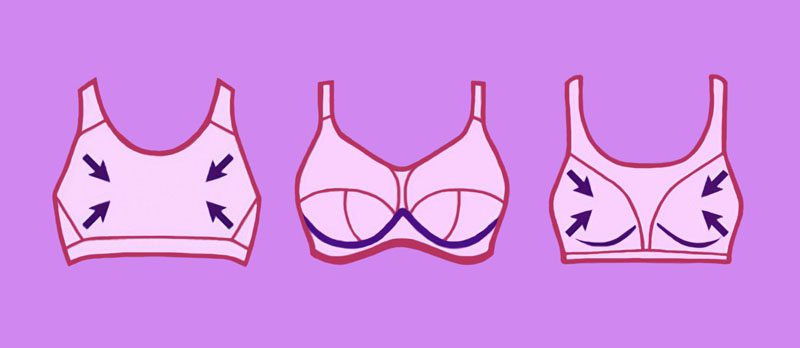
A final point about underwire: its function is primarily to shape and direct your breast tissue, so if it’s not your cup of tea, it’s easy to forego. Wire-free options can be just as functional as a wired bra, although they might have a bit of a different aesthetic. Your bra preferences are entirely personal, and it’s simply false that anyone “needs” an underwire, regardless of how busty they may happen to be. If, however, your underwire aversion is due to a history of discomfort, understand that there’s very likely a wired bra out there that will alleviate those issues with an improved fit. The Grail team can help you figure out which underwire characteristics will be your best match.


0 Comments