
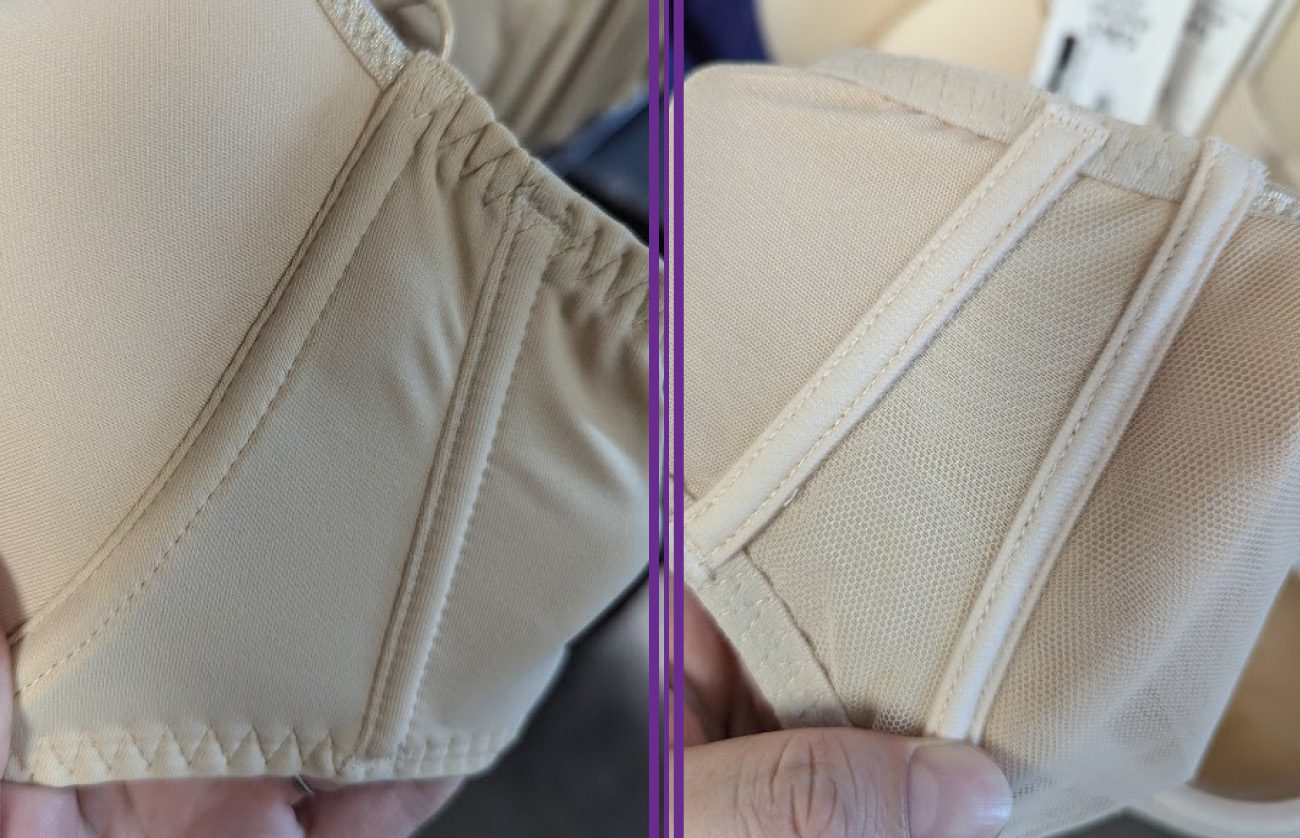
Underwires aren’t the only part used in some bras to give them rigidity and structure. Plastic boning, or “stays”, are sometimes incorporated into certain bra styles to create a specific shape or keep the fabric from crumpling or rolling. Most modern stays are made of a semi-flexible plastic, cut to the appropriate size with rounded tips. Like underwire, they can vary a lot in length, width, thickness, and other characteristics.
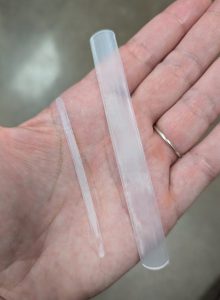
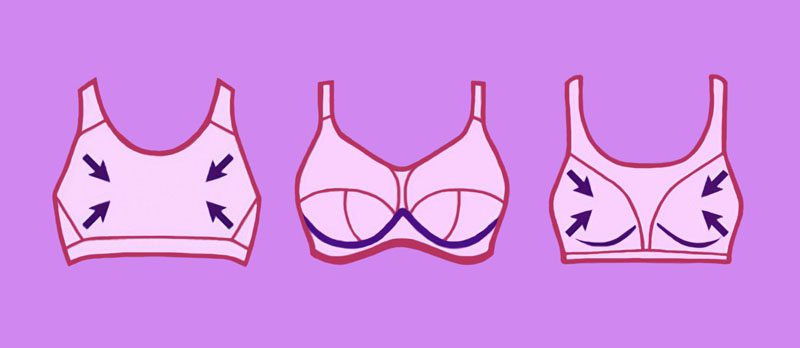
By far the most common use of boning in bras is in the form of side stays, a vertical strip that is encased in a fabric sheath and sewn into the band of the bra. Side stays are generally positioned right at the sides of your body and under the armpits, just past the bra’s underwire (if it is a wired bra style.) The purpose of side stays is to help the band lay flat & smooth by preventing any gathering or bunching of the material. Some bra wearers prefer this, especially if rolling bands are a particular pet peeve for them. Side stays can show up in everyday underwired bras, whether padded or non-padded:
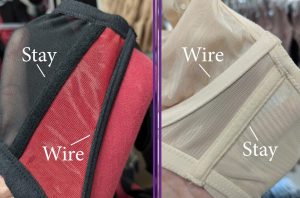
However, they’re used most frequently in styles where the designers really want extra firmness in the band. For example, it’s rare to see a strapless bra without side stays. Non-boned strapless bras do exist, but they’re the exception.

The other place where side stays show up very frequently is in wire-free bras. Wireless bras are already a bit less rigid considering that the cups are constructed entirely with flexible materials. Additionally, the bands on wire-free bras are generally wider and extend lower onto the torso in the front than their underwired counterparts. An underwire creates a distinct stop point for breast tissue at the base of the cups. Without one, bra designers compensate with extra surface area around the band to build a supportive structure, distribute pressure, and keep the breasts fully contained underneath. Unfortunately, this means that just about any wireless bra has increased potential for bunching or rolling up, depending on the wearer’s body and where that bra band lands on the person. Bra makers can use boning to reinforce the band and help keep it in its proper position.
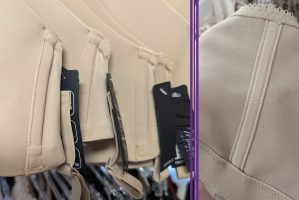
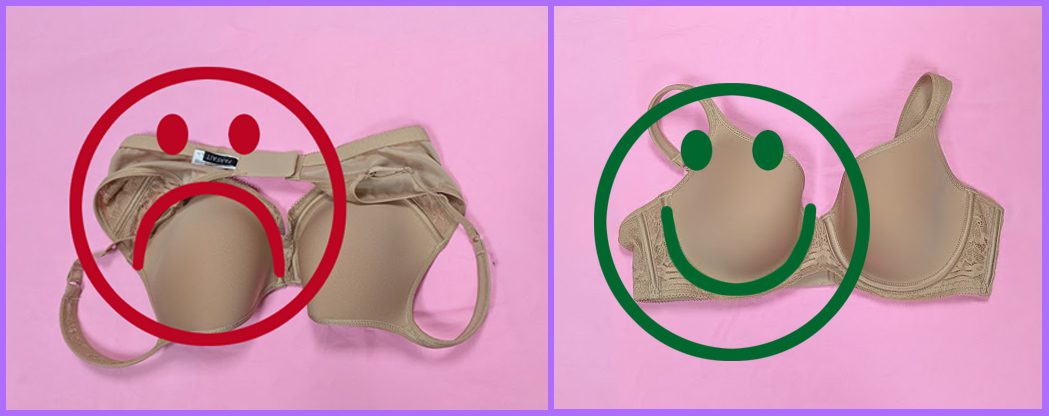
Unfortunately, this can sometimes backfire. Individual wearers may find that the stays on certain bras cause just as much discomfort as the underwires they wanted to avoid. Whether or not you can feel the stays depends on exactly where they sit on your body, how sensitive you are in that particular spot, and how well cushioned the tips are in that particular bra style. Ideally, the boning will extend more or less to the entire height of the band and have the ends securely anchored into the top and bottom stitching. I have personally seen the most trouble with side stays when the tips are not well anchored, and they sort of float inside a sheath of soft fabric instead. Since the boning is slightly flexible, the ends can curve and press into the wearer’s sides while the bra is on. Here are a couple of examples from bras that now live on our clearance rack:
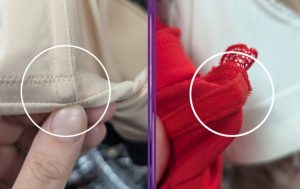
It really is a case-by-case situation whether this type of boning will be problematic for a client or not. Side stays are not a deal-breaker for us here at Grail when we’re considering adding a new bra style to our inventory, but it does alert us that a bra may not work well for a certain subset of our customers. We also make a point of really feeling for the ends to check the quality of the construction.
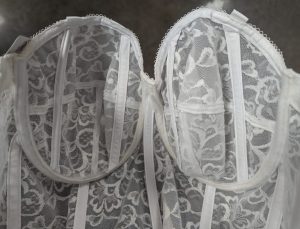
There are a few other uses of plastic boning in bras that are far less common. These include boning to give rigidity to the cups themselves, like this bizarre bridal bustier that we’ve also decided to stop stocking because the fit is just so fussy:
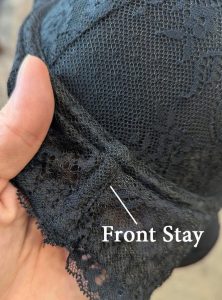
Lastly, some longline styles include front stays to help keep the band in place, which the Grail team has decided to avoid as a rule going forward. Although a flipping or rolling band can be an aesthetic issue- or occasionally a sensory issue if the material bunches up uncomfortably under the bust- it is nowhere near as problematic as pokey plastic that flexes point-first into your torso when you lean forward or sit down. I’ll vent more about that another time. 😛

0 Comments