

Your bra size probably isn’t 36C. It probably isn’t 34B, 34C, 36B, or 38B either. I’m not just saying this as a bra fitter but also as a former 36B bra wearer.
I felt compelled to write this post as our team finished sorting a large batch of recent donations to our Bra Bank community resource. The bra donations that we receive most frequently are these sizes I’m picking on above, and we rarely give them out to Bra Bank recipients because very few people are suited to these sizes when properly fitted. We have entire bins of bras for just 36C, 38B, etc., while much more common bra sizes are all stored together, five or more sizes per bin, because we receive far fewer bras in those sizes and we give them out far more frequently. Clearly, a large number of bra wearers are purchasing these uncommon sizes because they believe that’s “their size“, and then they donate those bras when they aren’t comfortable or functional.
Yes, I’m saying that many bra sizes that are perceived to be common are relatively rare and overly represented in off-the-rack retail. In fact, a fair proportion of the bras that we sell in these sizes (36B-C, 38B) at Grail are to customers who have to size up their bands due to sensory issues or because the specific bra style runs small in the band or large in the cups, not because that’s a true representation of their average size.
So how does this mismatch occur between people’s ideas of what bra size they should be wearing and the actual size that would offer them a proper fit? Oof, I could probably write an entire textbook trying to answer that question. 🤦♀️ There are many overlapping and compounding reasons, and I’ll be taking a deeper dive into some of these points in future posts on this blog. From my personal experience, years of working with clients, and even more years of being a bra nerd on the internet, the following are major sources of confusion for bra wearers:
- “+4 sizing” and brand size charts. Many American bra brands, and even a few international brands, will instruct you to add inches to your ribcage measurement in order to calculate your bra size on their size charts. Most often, the chart will ask for the addition of 4 inches on an even-numbered measurement or 5 inches on an odd measurement, which is why this practice is often referred to as “+4 sizing.” This is a giant can of worms, and I’ll definitely get on my soapbox at some point about why this sizing method does not and cannot get you into a properly fitting bra. (For now, check out this post from the r/ABraThatFits forum about the history and problems associated with +4 sizing.) I fully realize how crazy it sounds to tell you to ignore a brand’s own size charts, but the gist of it is that these brands want to manufacture as few sizes as possible while still making sales to as large a range of people as possible. The problem is, they’re selling you a bra that doesn’t fit you.
- +4 sizing doesn’t just put you into a larger band size. It reduces your cup letter due to the proportional nature of bra sizing. Plus, you’re actually losing cup capacity, not just sister-sizing, because bra bands are sized in 2-inch increments and bra cups are only sized in 1-inch increments.
- A too-large bra band doesn’t immediately feel uncomfortable. After all, it doesn’t dig in, and it’s easy to fasten. Unfortunately, the bra won’t be functional. It shifts, chafes, rides up your back, and since it can’t bear the weight of your breasts from underneath, it will transfer strain to your shoulders. There’s no actual base of support.
- Many wearers simply misunderstand how bra sizes work, especially the fact that bra cup letters are meaningless without an associated band size. This can be an issue across the size spectrum, but it comes up allllll the time with small band sizes. A client with a very petite build who has only shopped in big-box stores is likely to show up at Grail in something like a 34A, the smallest size they’ve found available for sale. If their ribcage measures 28 inches and, hypothetically, our fitters feel that the cup volume in their old bra is appropriate, we’ll bring them 28D bras. 28D cups have the same volume as 34A cups, but one bra will hopefully fit while the other has a band that’s looser than their entire chest, boobs and all.
- Which leads us to next big issue: a majority of the bra-wearing public has an inaccurate mental image of what certain bra sizes “look like.” The Irish Bra Lady on Instagram has an entire series on what certain sizes actually look like in a well-fitting bra. It’s not what most people expect. Left to try to figure out bra sizing on their own, a lot of shoppers will chose a size that matches what they perceive their breast size to be. It just… doesn’t work that way. And clients will occasionally reject bras outright because the size just sounds to them like it “couldn’t possibly be right.”
- If we’re asking ourselves where these inaccurate ideas about what certain bra sizes look like originate, it certainly doesn’t help that the general population still talks about bra cups a certain way: “Oh, I used to be a B, but since getting pregnant, I’m now a D.” “My sister was already a D cup in middle school.” “My boobs are sooo heavy. They’re DDs!” “I’d like to buy a bra for my girlfriend. I think she’s a C?”
- In addition to… and quite possibly as a result of… the way the public perceives cup letters, many wearers have their own strong psychological associations with bra sizes. Often, people associate a stigma with having either a too-small letter (Itty Bitty Titty Committee, inadequately feminine, unattractive) or a too-large letter (sexualization, correlation with being overweight.) More petite clients rarely object to being properly sized into a larger cup letter, but it’s not at all unusual for bustier customers to be actually upset about a larger cup size or even refuse to try bras over a certain letter.
- If everyone has the wrong idea about how bra sizes work, why? Probably because so few people have ever been taught otherwise. Not their moms (or our own moms, most likely,) because no one taught them either. If our grandmother did attempt to impart a bra education, their information could predate the adoption of modern bra sizing, which originated in the 1970s. I blame the cultural treatment of women’s bodies as taboo, but that’s another soapbox. And again, bra brands themselves aren’t helping by perpetuating +4 sizing.
- Even if bra wearers don’t have a skewed mental image about what bra sizes look like, most of us aren’t great at “eyeballing” our own size. A common problem is using a front-facing viewpoint to gauge, when on most bodies, our breast tissue wraps halfway around our sides under the armpit. Your bra cups should encompass all of your breast tissue, not just the part of your boobs that’s visible from the front. This is a major reason why our clients will tell us that a bra’s cups “look huge” until they put it on, then voila… everything fills out! If it’s a padded bra, it’s going to look larger anyway; that padding is taking up space, after all.
- The average bra wearer doesn’t really know how to evaluate their bra fit either. Cup gaping is very often interpreted as too-large cups, when there are many other potential causes, most of which we see in the shop far more frequently: cups that are too tall, too shallow, a shape mismatch in other ways, or cups that are too small and are therefore being pushed away from the torso by breast tissue. Other, more important qualities of a proper fit are overlooked: tacking, no underwire in contact with breast tissue, and a wire that stays in the inframammary fold at the base of the breast. Wearers with fit issues know that their bras are uncomfortable, but they’re not able to pinpoint why. They may well believe that all bras are just inherently uncomfortable.
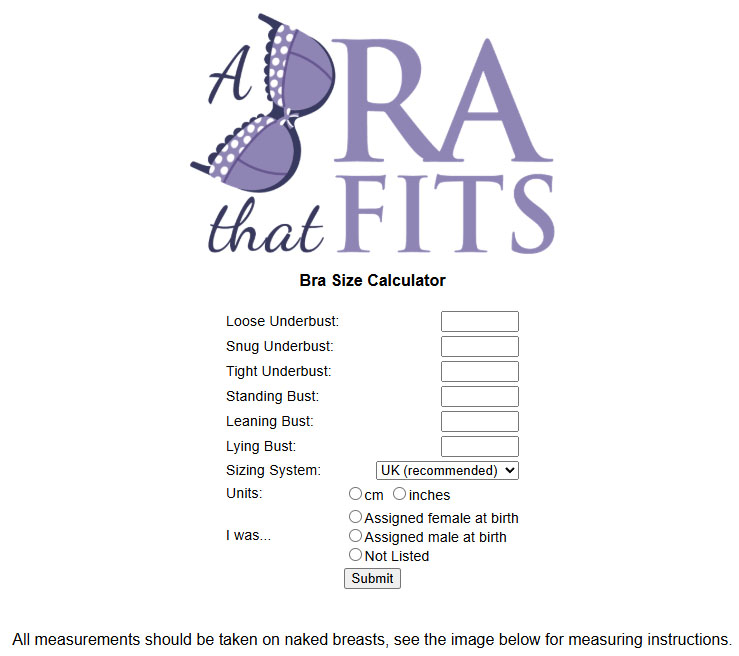
People with a baseline bra size of 36C absolutely do exist! However, if you think you’re one of them, I strongly recommend getting a knowledgeable second opinion. If you can’t check in with the Grail team, use the Reddit ABraThatFits calculator. You’re likely in for a shock.

0 Comments