

Grail’s clients are an incredibly diverse group, representing a whole spectrum of sizes & body types, ethnicities, gender expression, and ages. Close to a third of our customers are in their 60s, 70s, and beyond. We often hear from these clients that they seek us out to help them find bra solutions when the sizes and styles they’ve worn in the past are no longer working due to body changes… which is a similar scenario to our customers in other life stages, from puberty to postpartum. Older clients may also remember a time when bra fitting was a more common and accessible service offered in many places, including department stores, and the benefits of consulting a fit specialist. Fundamentally, there is no difference in the fitting process or the elements of a properly-fitting bra regardless of the wearer’s age. However, certain situations are more likely to arise in this age group, and since our client interactions are always tailored to the individual, the Grail team will be paying extra attention to the following factors when working with senior customers.
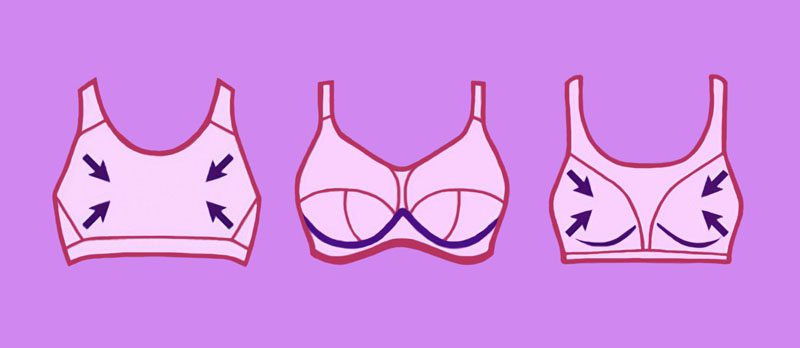
Technical Fit: As we’ve discussed before, bra “fit” combines size + shape. Unfortunately for the majority of bra wearers, it seems like a huge number of bra styles really are shaped for the minority of bodies. I’ll never understand why so many bra styles are so exaggeratedly round, when most breasts are some variation on a teardrop shape. As we all know, breast tissue tends to relax with age. We still see plenty of variation in body shapes, but seniors with natural tissue tend to have a more bottom-heavy volume distribution with minimal top volume. (No, “saggy boobs” are not the result of either wearing bras or going without.) The skin on the upper chest may also be thinner and less taut. These traits are similar to individuals who have lost a considerable amount of weight or who are post-weaning, especially if they had a significant volume increase while nursing. To find a good bra match, we need styles that don’t have an excessive amount of space at the top of the cups and that also do not have a tight, constricting edge at the neckline. Unlined bras usually do a better job of adapting to teardrop-shaped breasts, and foam-molded “T-shirt” bras tend to be the worst offenders in the “shaped like a softball” kind of way. Some of my favorite underwired options for this suite of needs are the Back Appeal unlined bra and the Awareness style from Wacoal, or the Eve underwired bra from Anita/ Rosa Faia for folks who really prefer something with a bit of padding. Anita/ Rosa Faia also makes fabulous wire-free bras for these considerations as well, like the Havanna seamed comfort bra and the Selma soft spacer bra. Sloping shoulders may also be a problem for some seniors, and there are many potential solutions: wide comfort straps, close-set straps, or a posture back combined with front closure.
Some, but not all, older clients prefer non-wire bras because they find them to be more comfortable. (More on that below). On the other hand, the job of an underwire is to provide shaping and lift, and many seniors favor the aesthetics of their profile in a wired bra versus the more relaxed look of wireless styles.
Sensory Issues: How a bra- or any undergarment- feels on the body is probably the most important thing of all. We’ve previously written an entire blog post dedicated to the sensory side of bras. Bottom line: everyone has different perceptions of texture and pressure, and what is comfortable to one person may be intolerable to another. I don’t have a precise medical explanation, but any fitter with a lot of first-hand experience will tell you, most people seem to get more sensitive to these tactile issues as we age. Perhaps it’s related to skin density, something in the nervous system, or a combination of factors. This means that many older bra wearers are more likely to be bothered by rough textures, seams that lay directly against the skin, or underwires and stays/ boning in their bras, especially if they push against a particularly sensitive area. An even bigger problem can sometimes be perceptions of pressure. Most professional bra fitters tend to favor putting clients in snug bra bands initially because it creates a more stable base of support (as your bra should be holding your breasts up from underneath, not lifting from the straps,) and because we know that bras break in and stretch out over time. However, anyone with significant pressure sensitivity will likely find that these bands feel much too tight. In order to strike the best balance between technical fit and tolerability, we may need to go up a band size- or more- for a particular customer. Some senior clients require an increase of 2, 3, or more band sizes beyond what their body measurements would guide. Eventually, we reach a point where the bra band can no longer properly hold or contain the breast tissue, and we may need to look at alternative undergarments in place of a traditional bra. Once again, sensory issues are not exclusive to older individuals, but they are seen more frequently as we advance in age.
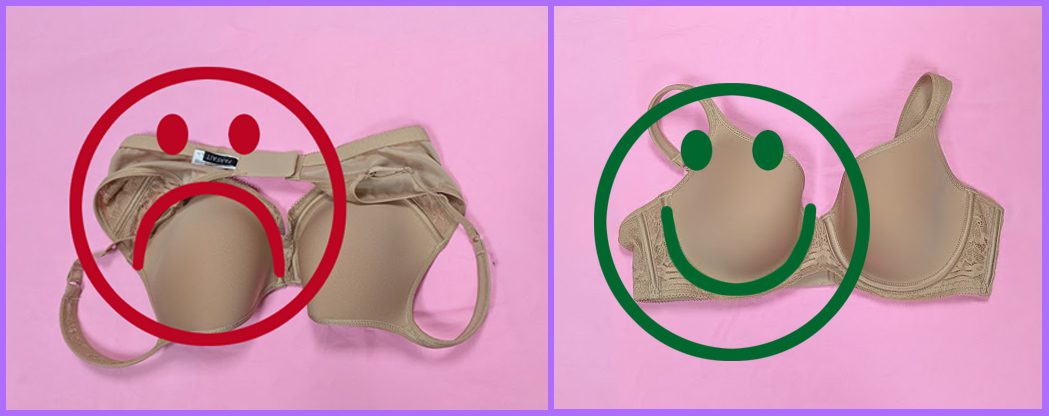
Adaptive Features & Accessibility: Fastening a traditional back-closure bra requires both manual dexterity and shoulder mobility, especially being able to actually reach behind your own back to do up several sets of clasps. Many bra wearers use the hook-in-front-and-twist-around maneuver, which puts a bit more wear-and-tear on a bra over time, but more importantly, still requires a fair amount of mobility. People of all ages can have mobility issues, but this is another scenario that presents more often among our older clients. The good news is that front-fastening and otherwise accessible bras are available. The not-so-good news, as we’ve also written about previously, is that it’s a bit of an underserved market with a short supply of options that are (a) size-inclusive, (b) solidly constructed and ethically made, and (c) well-fitting. Grail stocks an assortment of the best adaptive styles we’ve located on the American and international market, and we’re constantly on the hunt for any new options coming out to add variety to our existing inventory. There are different types of front-fastening mechanisms. Hook-and-eyes, like those commonly used on back-fastening clasps, are probably the sturdiest type of closure. Depending on the number of hooks, however, they can be laborious to fasten and unfasten. Single-point clasps take less time, but lining up the two halves can be tricky, especially if your fingers tremble at all. Zippers have the same issue. Snaps/ poppers can work well for some wearers, but they require a fair amount of finger pressure to secure, and they may come open accidentally. Velcro closures are the easiest but also the least secure. A few brands have experimented with magnetic closures, but none are currently available on the retail market. I’d love to see someone else adopting this technology.
As a final note, I’ll come back to my old refrain that being able to try bras on in person is really the only sure-fire way to figure out your best match. This is extra important for anyone with special fitting considerations or needs that require a bit of finessing. If this article applies to you or a loved one, we’d be happy to collaborate on personalized solutions for any of these issues and more. Let us know how we can help! 😊

0 Comments