
Let’s talk about bra bands and how they should fit when properly sized. Compared to bra cup sizing, band fitting should be relatively straightforward… Unfortunately, when it comes to bras, there always seems to be some misinformation or inconsistency creating confusion for wearers. 😕
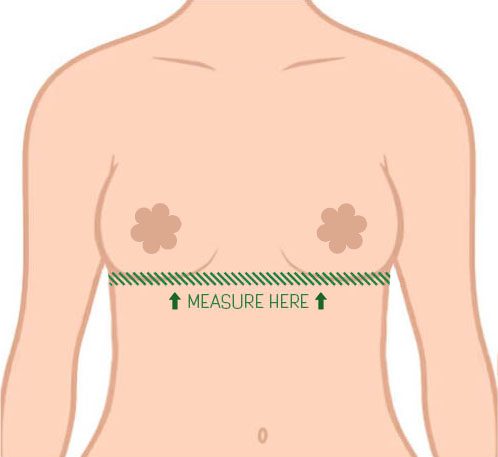
How Band Size is Determined:
Start by measuring your ribcage directly under your breasts. If you’re working with a member of the Grail fitting team, this is also the first measurement we’ll take. Bra bands are sized in 2-inch even-numbered increments that correspond to the stretched measurement of that band. Therefore, if your under-bust measurement is an odd number, round up to the nearest even number: 29″ → 30 and 35″ → 36, etc. If your under-bust measurement is an even number, don’t change anything. This is your starting band size, the one you should try first. Since every bra fits slightly differently and no two bodies are alike, it’s always possible that a (usually one-size-step) adjustment might be necessary as a result of inconsistent bra sizing or sensory issues for the wearer. Still, in the overwhelming majority of cases, your best-fitting band size will be equivalent to the circumference of your ribcage where your breast base connects to your torso.
You shouldn’t add inches to your under-bust measurement when calculating your starting band size. This is sometimes called “+4 sizing”, and there are a lot of reasons why it doesn’t work, which we’ll explore in more depth another time. A few bra brands (and even one very well-known lingerie chain) will instruct you to measure for your band size by putting the measuring tape above your breasts, under your armpits. Don’t do this. It’s a completely silly practice, like trying to figure out your shoe size by measuring around your head. You need to measure the part of the body where the clothing is actually going to be worn.
Are you sure I shouldn’t add inches to find my band size?
Absolutely positively sure! Again, there’s a whole history behind the practice of “+4 sizing,” but the most important thing is to consider how a bra actually works. The band provides your stable base of support, and it needs to hold you up from underneath. If it doesn’t fit snugly, nothing sits securely, and it can’t actually hold up anything. A too-loose band shifts around, rides up your back, chafes your skin as it moves, allows your straps to slip off, and may not even keep your breasts from slipping out from the bottom of the cups. The band should be closely tailored to your body proportions and snugly fitted around your ribcage… essentially the same dimensions as the bra band’s stretched measurement, which is what the number portion of bra sizes represents.
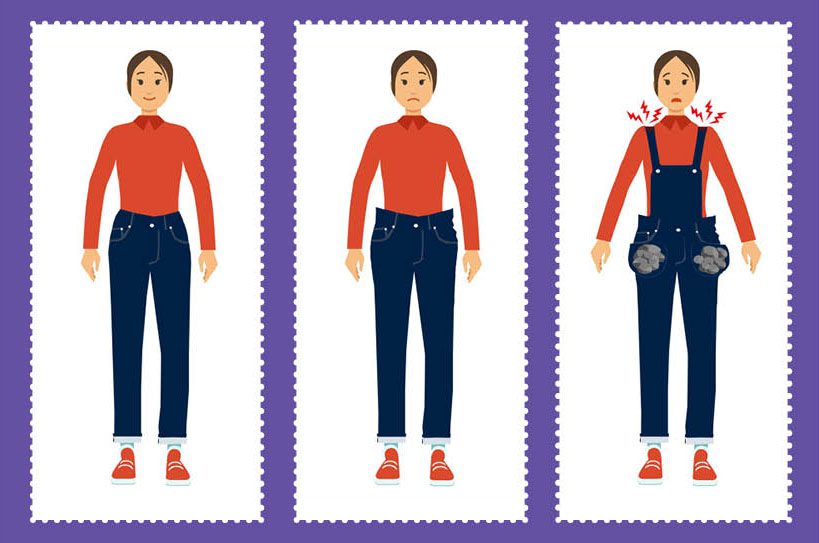
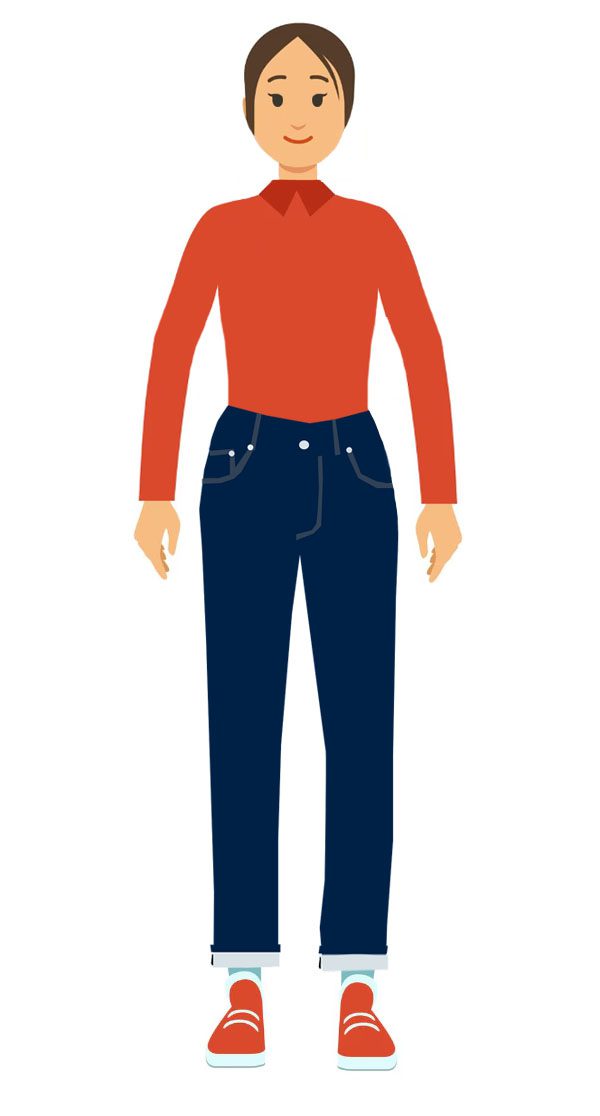
Imagine for a moment that we were talking about jeans. In order for your jeans to stay up and hug your body comfortably, the waistband should be close in size to the measurement of your actual waist.
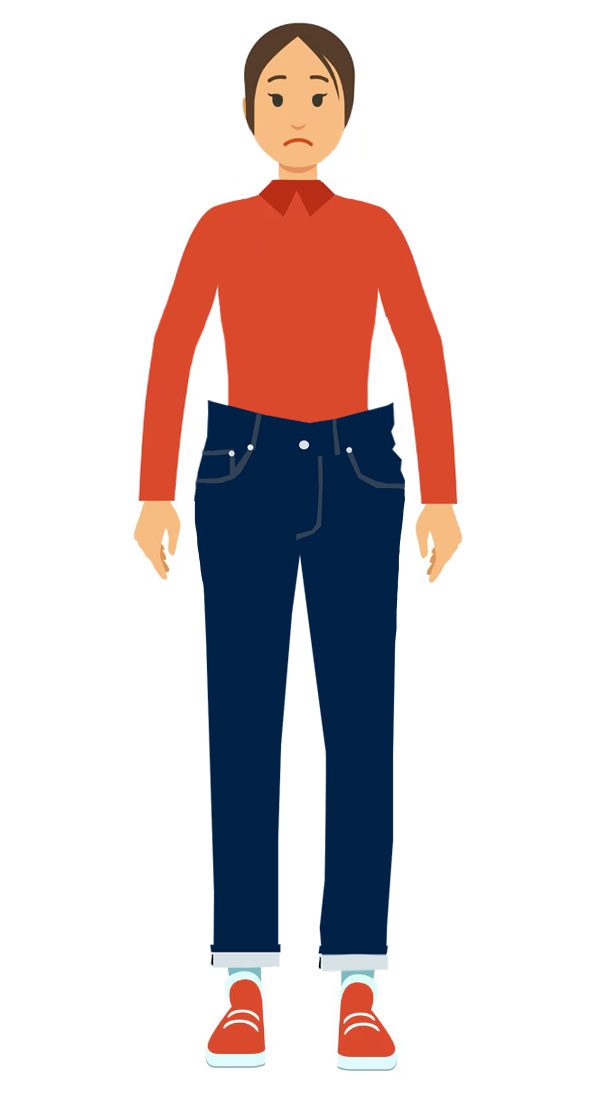
What if we decide to add 4 or 5 inches to that waist measurement? You would be wearing a waistband that is 4 or 5 inches too big. Now you’re in danger of having your jeans slide down…
And it can get even worse. What if your jeans didn’t just have to stay up, they also needed to support weight the way a bra does? For this analogy, let’s also add straps and turn these jeans into overalls. Without a snug fit at the waist, the only thing left to bear that weight is the straps. This is a situation that we see all the time with busty clients and their bra straps, unfortunately.
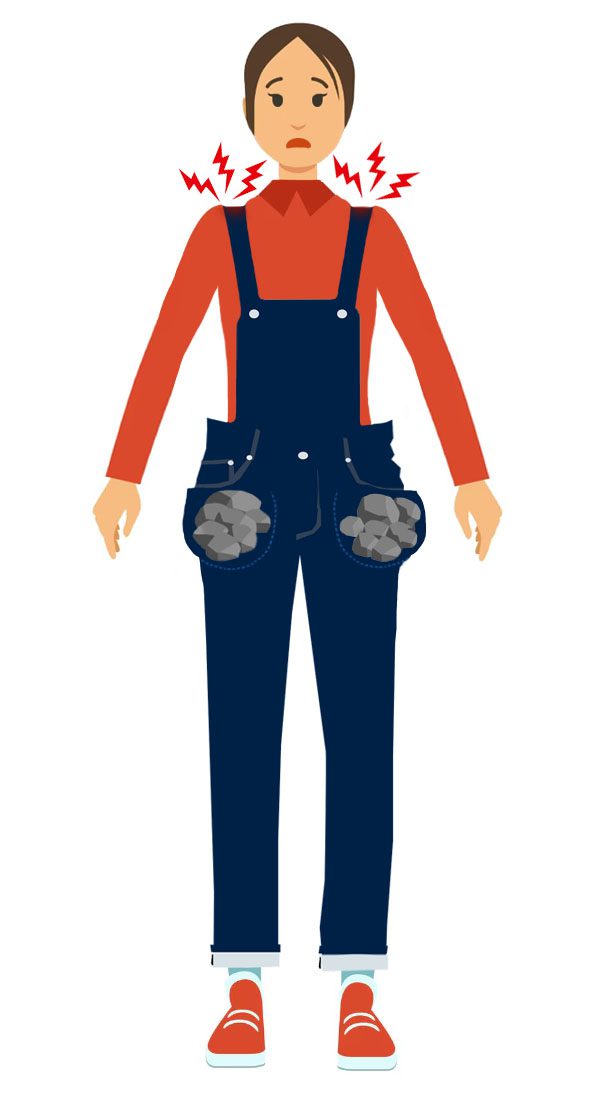
Clearly, this isn’t how you want your jeans to fit. A too-loose bra band also causes all sorts of problems.
How tight should my band actually be?
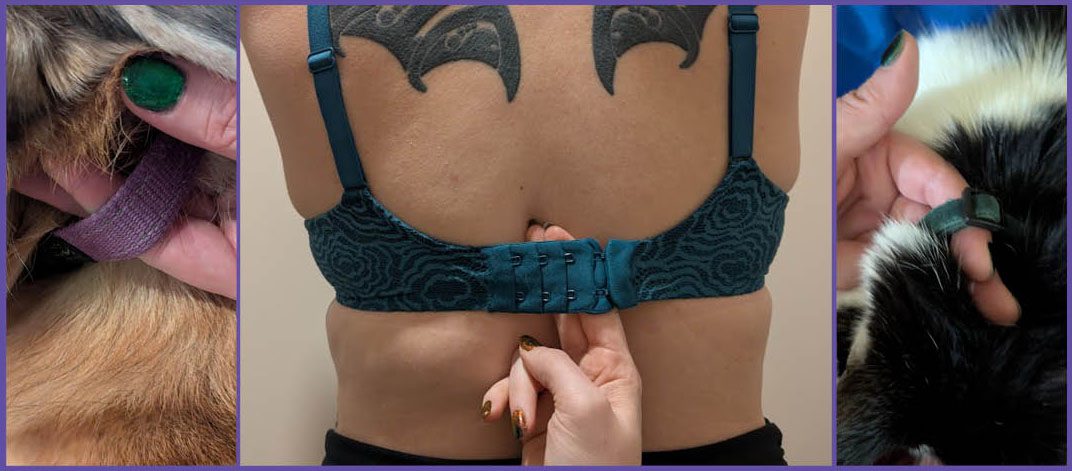
We use the word “snug” a lot when we’re working with clients. The band should have enough tension to hold your breasts up from underneath without being restrictive. One test is to use the same rule-of-thumb recommended for pet collars: you should be able to slide two (and only two) fingers between the band and the wearer’s body.
There are a couple of additional points to keep in mind here, especially regarding new bras. Bras generally go through an initial breaking-in period, and a bra in the fitting room is a bit tighter and stiffer than it will be after a few wears and laundering. The Grail team tries to make recommendations that take this process into account. We want to give our customers the best long-term fit for their investment and not put them into bras that are likely to lose support prematurely. Secondly, it’s extremely common for people to have a hyper-awareness of new sensations on their bodies. When someone puts on a bra that is one, two, or more band sizes smaller than what they’re used to wearing, it will likely feels strange initially. Our fitters often ask: “Does the band feel uncomfortable or unfamiliar?” when this situation arises.
Of course, there are reasons why a technically well-fitting band may actually be uncomfortable for some wearers. Sensory issues are real and valid.
Are pressure marks a problem?
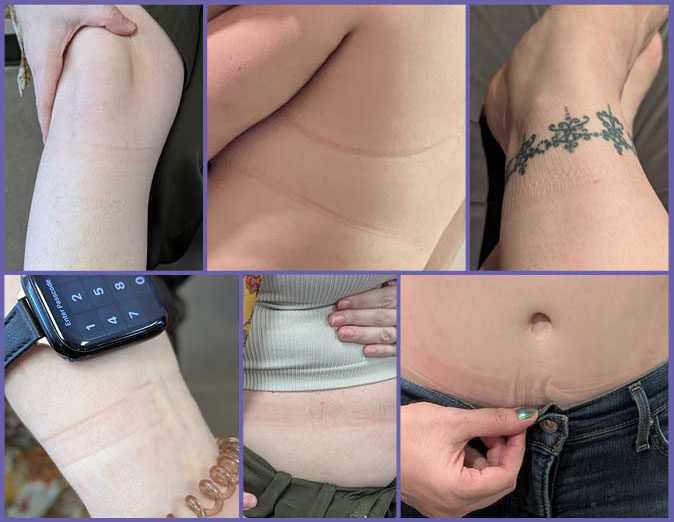
It is absolutely normal to get pressure marks from any snug (especially elasticized) garment: socks, pants, sleeve cuffs, undies, watch bands, and bras! 😊 We find that people tend to worry a lot more about pressure marks from their bras than their socks, but it’s exactly the same phenomenon. If these marks are actually painful, that’s another story and could point to either a bra problem or an underlying medical condition.
How tight is too tight?
So, there absolutely is a point at which a bra band is no longer supportively snug and is simply TOO TIGHT. It’s just very rare for wearers to be walking around in overly tight bands because they can feel the problem immediately. The sneaky thing about too-loose bands is that they don’t cause discomfort directly… they just don’t work, which causes so many secondary and long-term complications.
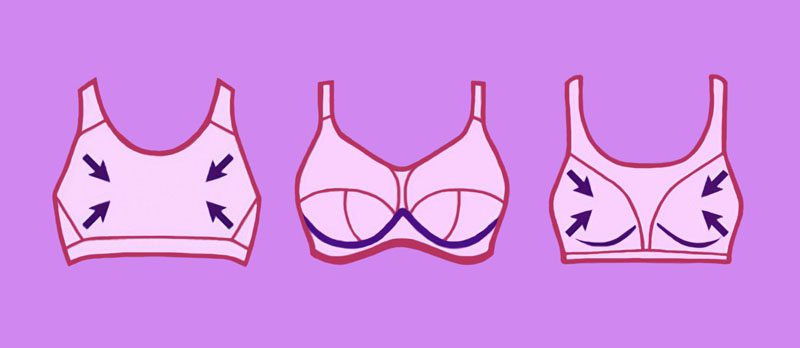
A truly too-tight bra band has a shorter maximum stretched length than the circumference of the wearer’s under-bust. In order to connect around that person’s chest, the band must (a) actually dig into the wearer’s body to make a smaller circumference, (b) deform the bra itself, especially the hook-and-eye clasp, as it stretches past its limit, or (c) probably a bit of both. It’s likely that this will hurt. Looking for signs on the body isn’t always reliable because a supportive band, especially one that’s narrow top-to-bottom, may create the appearance of constriction on wearers with any extra side “squish.” Signs are often clearer on the bra itself; for example, use the finger test above to see if the band is too tight to slide two fingers underneath. Also inspect the clasp closely. An overly tight band will often lead to straining hooks and eyes that are being pulled from their anchor points, stretched and pinched eye fasteners, and an hourglass-shaped elongation of the eye strip. (Second pic courtesy of Reddit.) Honestly, I have only ever seen this a handful of times, on clients who had experienced a substantial weight change between fittings.

If you have additional questions, or if you think that you might need a fit check on your bra band, hit up the Grail team anytime!


0 Comments